The flag of Andorra
Southern Europe · Andorra la Vella
- red34%
- navy32%
- yellow32%
- 2 more in small details
Three columns. 16 flags share this layout, in different colours.
One plate per main colour.
Tap the flag to put it back together.
Investigation
Andorra: a coat of arms for two princes
Andorra has two princes who share the job of head of state, and its coat of arms gives each of them two of its four houses. Tap through the steps to build the flag and read the story it tells.


Andorra’s 1996 law on its state symbols only calls the flag three similar stripes: blue by the pole, then yellow, then red. The government’s drawing rules, approved in 1999, pin them down. On a flag long, the blue and the red are each wide and the yellow is , and the flag is high. When the Consell General made the flag official in 1942, it called the three stripes the same size.
The tricolour goes back to 11 December 1866, when Guillem d’Areny-Plandolit, who led Andorra’s council as its síndic general, put it to Emperor Napoleon III at the palace of Compiègne. Newspapers then said the blue was for France, the red for Spain and the yellow for “the republic”, as Andorra was often called. A history of the flag from Andorra’s National Archives says no official paper gives the reasons. Its author thinks the yellow and red more likely came from the red and gold stripes in the coat of arms, though he says that’s only a theory.
In the middle of the yellow sits the coat of arms. The law says it’s made of four houses, two for each of Andorra’s co-princes, who are jointly its head of state: the Bishop of Urgell and the President of France. The government’s drawing letters the houses: is the bishopric, Catalonia, Foix and Béarn.
The bishopric’s house is the only one the law spells out: a gold mitre and crozier, a bishop’s hat and staff, on red. Andorra’s two princes go back to a deal of 8 September 1278, which gave a bishop of Urgell and a count of Foix the same rights over its valleys. Today the Bishop of Urgell is still one of the two.
Foix’s house, top right, and Catalonia’s, bottom left, are both red stripes on gold, so count them: Foix has three and Catalonia has four. The counts of Foix were the bishop’s partners in 1278. Their rights passed down to the French crown with Henry of Navarre, and from there to France’s president.
Béarn’s house, bottom right, has two red cows, each wearing a blue collar with a bell. Britannica says Béarn passed to the counts of Foix in 1290, and went to France’s crown along with Foix in 1589. When the Consell General made the arms official in 1942, it described these cows as gold on green and looking out of the shield. The government’s drawing today has them red on gold, facing in.
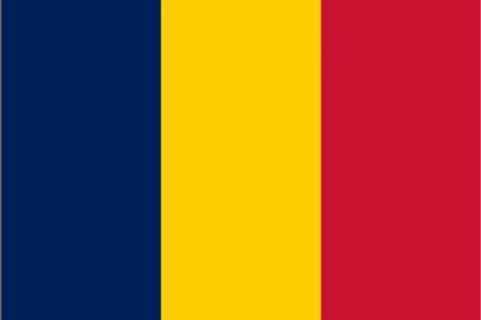
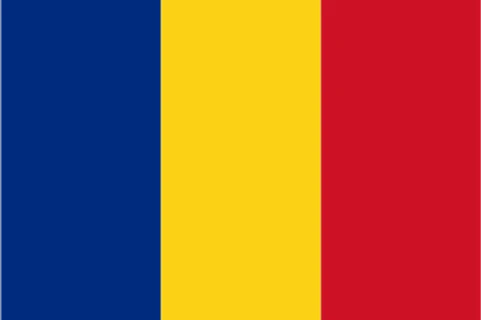
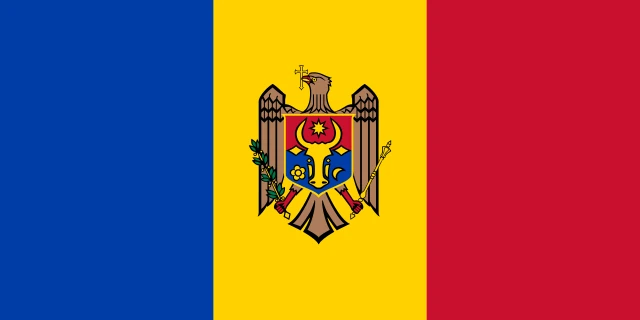
Put together, that’s Andorra’s flag, with the motto Virtus Unita Fortior along the foot of the frame round the shield. The law lets the coat of arms be left off on ribbons and other small formats. Even with it on, the Atlas’s look-alike measure finds Romania’s flag close enough to count as a look-alike, with Chad’s and Moldova’s next. Britannica says it’s the coat of arms in the middle that sets Andorra’s apart.
Flags that look like it
You’ll find Andorra on these lists
Each one opens the list.
More flags taken apart in Europe
Each card opens that flag, taken apart step by step.
- AustriaAustria: the white they tore out
- BelarusBelarus: the flag with its own pole
- BelgiumBelgium: the colours of Brabant’s shield
- Bosnia and HerzegovinaBosnia and Herzegovina: stars cut off at both ends
- BulgariaBulgaria: the flag in the fine print
- CroatiaCroatia: a chequerboard and its crown