The flag of Ethiopia
Eastern Africa · Addis Ababa
- green30%
- red30%
- yellow25%
- blue14%
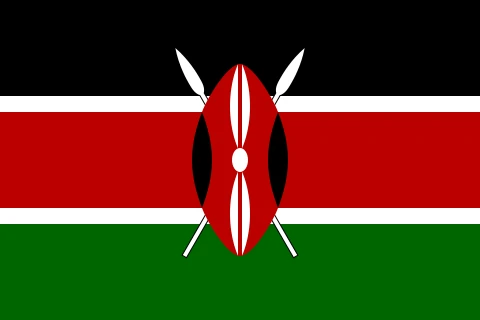
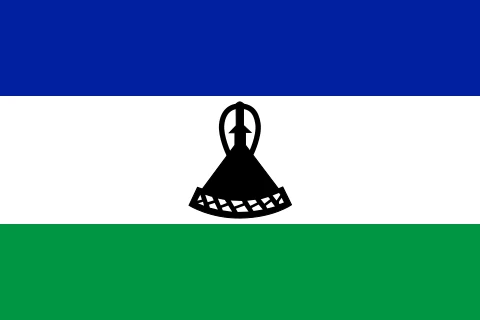
Pan-African. It’s one of the flags in red, gold and green, the same colours as Ethiopia’s.
One plate per main colour.
Tap the flag to put it back together.
Investigation
Ethiopia: a star of equal lines
Ethiopia’s flag has three colours and a blue emblem in the middle. Its flag law says what every part of it means, and even how big the blue disc has to be. Build it up a step at a time from that law.


Ethiopia’s constitution puts at the top, yellow in the middle and red at the bottom, and it makes the three stripes the same height. The flag law says the green stands for labour, fertility and development.
The law doesn’t give any shades. It only says the colours are bright and basic, so the ones in this drawing are the artwork’s own.
Next comes , right across the middle. The law says it stands for “hope, justice and equality”.
At the bottom there’s . The law says it’s for sacrifice and heroism, so that freedom and equality can win through.
The national emblem sits right in the middle of the flag, on a disc. The law says the blue stands for peace.
The law even says how big the disc is. Its edge reaches into the green at the top and into the red at the bottom. That makes it two thirds of the flag’s height across. The law also makes the flag twice as long as it’s high.
The earlier flag law, from 1996, didn’t say how big the disc was. This drawing keeps to the rule the 2009 law added.
On the disc, straight yellow of the same length come in from every side and join up. The law says they stand for the equality of Ethiopia’s nations, nationalities and peoples, and of its religions. Together they make , and that’s the unity those peoples founded “of their common will”.
The law doesn’t say how many lines there are. This artwork draws five, so its star has five points.
Yellow shine out from the points where the lines cross. The law says they show the bright future in sight for the peoples who came together.
The law says the flag is only ever these colours with the emblem in the middle. Using it without the emblem comes first on its list of things you mustn’t do. It also has the biggest penalty, a fine of up to 5000 birr or up to a year and a half in prison. The rest of the list goes up to 3000 birr or a year.
Britannica traces the green, yellow and red back much further than the star. It says pennants in those colours flew before Emperor Menilek II set up the first official flag on 6 October 1897. It says that later the flag carried a lion when it was flown for official purposes, until the empire fell in 1974. The blue disc and its star came in with a flag law published on 6 February 1996.
Britannica says the disc came in with the constitution. But the constitution came out in August 1995 and only asks for an emblem in the middle. The disc and star are drawn in the flag law of February 1996.
Britannica says green, yellow and red later came to be known as the Pan-African colours. It says they were on the flags of Ethiopia, Ghana and Guinea, which, along with Liberia, were the oldest independent African states outside the Arab world. Mali chose them for its flag too.
Britannica doesn’t say the other countries took the colours from Ethiopia, only that they share them.
You’ll find Ethiopia on these lists
Each one opens the list.
More flags taken apart in Africa
Each card opens that flag, taken apart step by step.