The flag of Haiti
Caribbean · Port-au-Prince
- navy48%
- red48%
- white2%
- 3 more in small details
Weapons. Only 11 flags have one.
One plate per main colour.
Tap the flag to put it back together.
Investigation
Haiti: a palm under the cap of liberty
Haiti’s flag is blue over red, with the country’s coat of arms on a white square in the middle. Its constitution describes the whole thing in a single article. Build it up a step at a time from that article.


Article 3 of Haiti’s constitution describes the flag. It starts with two bands of cloth the same size, laid flat, with the one on top.
The band goes underneath it, just as tall as the blue. Article 2 makes these two the national colours, and there’s no white among them.
Right in the middle, the constitution puts a of cloth. The arms of the Republic go on it, and the rest of the article says what they are.
The constitution calls it a square, but it doesn’t give any sizes, for the square or for the flag. In this drawing the square is a little wider than it’s tall, 11 to 9, on a flag 5 long and 3 high.
The first thing the arms have is a palm, “le Palmiste”. In this drawing it’s a tall standing right in the middle of the square.
The constitution puts the cap of liberty on top of the palm. Here the is blue with a red band, and it sits on a golden pole above the fronds.
The palm shades a with its fronds. The constitution doesn’t say what goes in it. In this drawing there are flags in blue and red, cannons with piles of cannonballs, a drum in the middle, and axes, bugles and anchors, all on green grass.
Last of all comes a scroll with the , “L’Union fait la force”. It means “union makes strength”. That’s the arms complete, and the flag too.
Britannica calls the plain blue and red the national flag, and says the government flies it with the arms. Haiti’s constitution describes only one flag, the one with the arms.
Haiti’s embassy in Washington tells the story this way. At the Congress of Arcahaie on 18 May 1803, Jean-Jacques Dessalines took the white band out of the French flag. What was left became the first Haitian flag, and the embassy says it stood for black and mixed-race people fighting together for their freedom. The embassy calls Catherine Flon a relative of his, and says she sewed the blue and red back together. The constitution still makes 18 May a national holiday, the Day of the Flag and of the University.
The embassy says the two bands stood upright at first, with the blue by the pole. It says they were laid flat on 1 January 1804, the day Haiti declared its independence.
The embassy says Alexandre Pétion brought back the blue and red in 1806 and put the arms on a white square in the middle. Then in 1964, under François Duvalier, a new constitution made the flag black and red, though it kept the arms. The embassy says the blue and red came back on 17 February 1986, ten days after his son Jean-Claude left the country. The constitution of 1987 made it official.
Britannica gives a different day for the blue and red’s return, 25 February 1986.
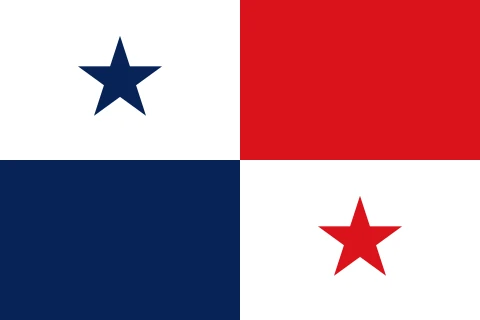
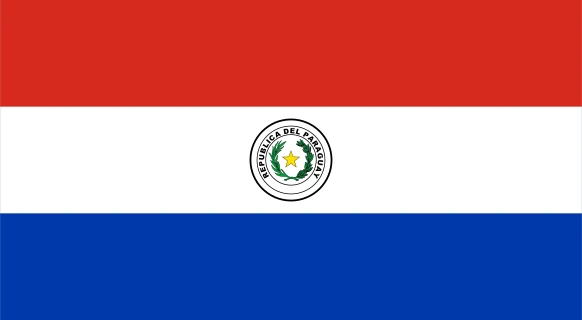
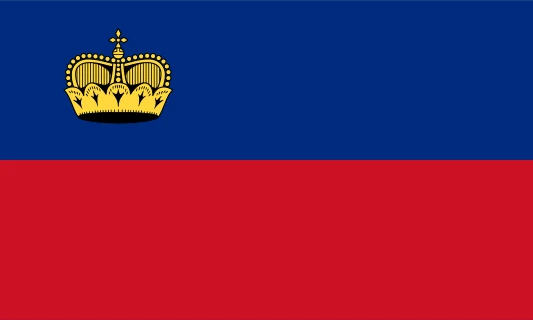
Flags that look like it
You’ll find Haiti on these lists
Each one opens the list.
More flags taken apart in the Americas
Each card opens that flag, taken apart step by step.