The flag of São Tomé and Príncipe
Middle Africa · São Tomé
- green53%
- yellow32%
- red12%
- black2%
Pan-African. It’s one of the flags in red, gold and green, the same colours as Ethiopia’s.
One plate per main colour.
Tap the flag to put it back together.
Investigation
São Tomé and Príncipe: one and a half, and a half
São Tomé and Príncipe’s Constitution builds the flag with two numbers. The middle bar is one and a half times as wide as each green one, and the red triangle is half as tall as its base. Build it from those two, and see the right angle they make when the tip sits halfway up.
São Tomé and Príncipe’s flag is set out in Article 14 of its Constitution, in one long sentence and one short one. The long one says the flag is made of three bars that run across it. The two on the outside are green, and they’re the same width. Call that width .
We read the Constitution in Portuguese, in the National Assembly’s text of the 2003 revision, and the translations on this page are our own.
The middle bar is the one the long sentence measures. It’s one and a half times as wide as each of the others, so it’s .
By our own sums, that splits the flag’s height into sevenths: 2 for the top green, 3 for the yellow and 2 for the bottom green. The artwork matches that exactly.
Then the sentence adds a triangle, and it puts the triangle’s on the left side of the flag.
The Constitution doesn’t say the base runs the whole way up the left edge. That’s how we read it, and it’s how the artwork draws it.
Then comes the short sentence. It says the triangle’s height is half its base. A triangle’s height is measured straight out from its base, so the tip reaches of the base in from the left edge.
The Constitution doesn’t say how far up the flag the tip goes. The artwork puts it on the middle line, halfway up. With the tip there, the corner it makes comes out at exactly . That’s a right angle, like the corner of a page.
The right angle is our own sum, not the Constitution’s. With the tip halfway up, each sloping side runs in as far as it drops, so the two sides meet square at the tip.
Now the colours. The two bars on the outside are , the middle one is , and the triangle is . That’s all Article 14 says about them. It gives no shades, and it doesn’t say what any colour stands for.
With no shades in the Constitution, the ones in this drawing are the artwork’s own.
The sentence also sets two black on the yellow bar, each with five points. It doesn’t say how big they are, or where on the bar they go.
So their size and place here are the artwork’s. It puts both on the middle line, one halfway along the flag and one three quarters of the way, and each star’s points reach a seventh of the flag’s height from its middle. Those measurements are ours, taken from the artwork.
The Constitution says it dates from 5 November 1975, when the MLSTP’s Political Bureau and the Constituent Assembly approved it at a joint meeting. Its Article 159 lists five revisions since, in 1980, 1982, 1987, 1990 and 2003. We set the flag’s two sentences in the 1975 text beside today’s, and apart from three capital letters, a comma and one plural, the words are the same. Back then it was Article 2. Today it’s Article 14.
The Constitution gives the flag no length, so it doesn’t say how long it is for its height. The artwork is twice as long as it’s tall. We read the 1975 text in the Diário da República of 15 December 1975. We looked for any change to the Constitution since 2003, and none turned up.
You’ll find São Tomé and Príncipe on these lists
Each one opens the list.
More flags taken apart in Africa
Each card opens that flag, taken apart step by step.
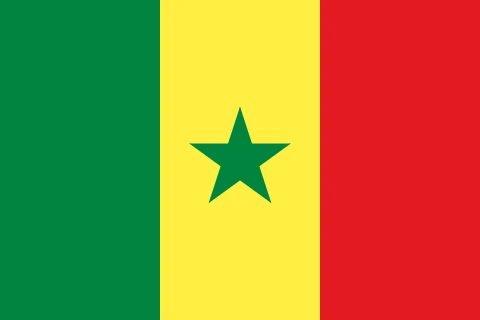
- SenegalSenegal: the star that took the kanaga’s place
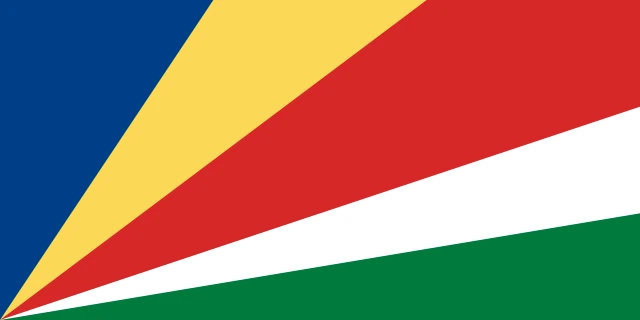
- SeychellesSeychelles: five bands from one corner
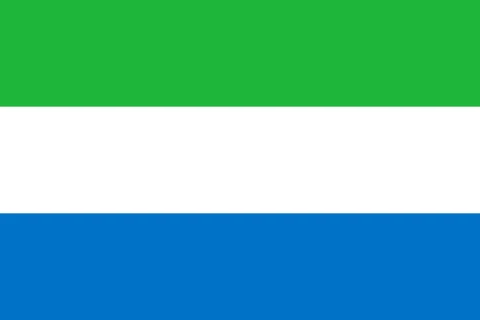
- Sierra LeoneSierra Leone: nine units across, six down
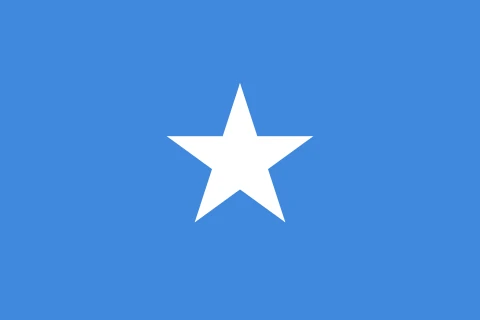
- SomaliaSomalia: a star with five equal points
- South AfricaSouth Africa: the story of the Y
- South SudanSouth Sudan: one star, two meanings