The flag of Cuba
Caribbean · Havana
- navy49%
- white31%
- red20%
Red, blue and white. 26 other flags use just these colours.
One plate per main colour.
Tap the flag to put it back together.
Investigation
Cuba: the law of the lone star
Cuba’s law on its national symbols measures the flag right down to its star. Build it up the way the law does, and you’ll also meet a second flag the law looks after, from 1868.


Cuba’s law on its national symbols, Law 128 of 2019, says the flag is twice as long as it’s high, with five stripes of the same width. Three of them are , a dark blue the law calls azul turquí. The law says they show the high hopes of Cuba’s patriots. They also stand for the way Cuba was divided up when the flag was designed, back in colonial times.
Britannica reads the blue stripes a little differently. It says they stood for the three military districts of Spanish Cuba. The law only speaks of how Cuba was divided up at the time, without a number.
Taking turns with the blue are two stripes. The law says they stand for pure ideals and for the virtue of Cubans.
At the end by the pole there’s a triangle with three equal sides. One side runs up the flag’s edge, the whole height of the flag, so every side is as long as the flag is high. The law says the triangle stands for the old ideals of liberty, equality and fraternity, and its red for the blood spilt in the struggle.
In the centre of the triangle there’s a white with five points, one of them pointing to the top edge. The law calls this the flag of the lone star. It says the star stands for a free, independent and sovereign republic, and for the unity of Cubans.
The law sets the star’s size as well. Its points touch an imaginary as wide as a third of the flag’s height.
The law says the flag was adopted at the Assembly of Guáimaro on 11 April 1869. It calls the flag an emblem of loyalty and honour, and an inspiration in Cuba’s fights for independence.
The law doesn’t say who designed the flag. Britannica says Cuban exiles in New York, led by Narciso López, took up a flag the poet Miguel Teurbe Tolón suggested. It says López carried it into battle at Cárdenas in 1850, and that was the first time it was raised in Cuba.
Britannica also says the flag was made Cuba’s national flag in 1902. The law only gives the Assembly of Guáimaro in 1869.
The law looks after a second flag too. Carlos Manuel de Céspedes raised it at his Demajagua sugar mill on 10 October 1868, when he rose up in arms against Spanish rule. The law describes the flag as well. Its top half has a red rectangle by the pole with a white star in it, and white beyond that. Its bottom half is dark blue. It flies beside the national flag in Bayamo and at Demajagua, and it always stands beside it in the hall where the National Assembly meets.
This picture is drawn from the law’s own plan. There the red rectangle’s length comes from the golden ratio, and the star fits a circle a third of the flag’s height across, like the national flag’s. The law gives no colour codes, so the colours are this artwork’s.
The law was passed in July 2019 and took effect 180 days after it was published that September. It replaced a law of 1983, and it says it set out to make the symbols easier to use and more present in society. Anyone may put the flag on their car or show it at home or at work, as long as they treat it with respect. For that, the law sets no size.
You’ll find Cuba on these lists
Each one opens the list.
More flags taken apart in the Americas
Each card opens that flag, taken apart step by step.
- DominicaWhat’s at the heart of Dominica’s flag?
- Dominican RepublicThe Dominican Republic: a Bible open at John 8:32
- EcuadorEcuador: a condor over Chimborazo
- El SalvadorEl Salvador: fourteen sprigs of laurel
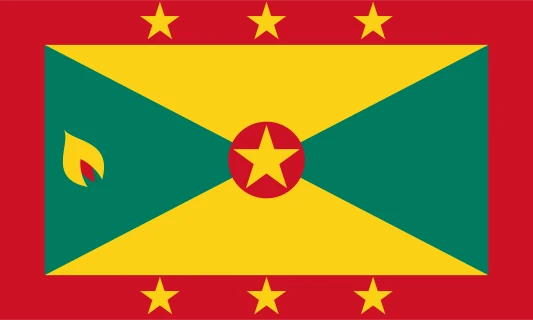
- GrenadaGrenada: triangles that aren’t equilateral
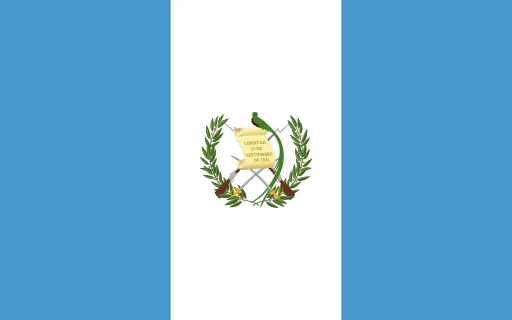
- GuatemalaGuatemala: the quetzal on the scroll