The flag of Thailand
South-Eastern Asia · Bangkok
- maroon33%
- white33%
- navy33%
Five stripes, mirrored. 7 flags share this layout, in different colours.
One plate per main colour.
Tap the flag to put it back together.
Investigation
Thailand: the stripe that turned blue
Thailand’s stripes have sat where they are since 1916. The next year the wide one in the middle turned from red to dark blue. Build it step by step from the flag texts in the Royal Gazette, and read the reasons they give.
The Prime Minister’s Office tells the early story in a booklet it put out in 2017, for the tricolour’s hundredth year. It says Siam’s merchant ships flew plain red until the reign of King Mongkut. That red was the same as other countries’ flags and hard to pick out, so the King had the people’s ships fly a on red, like the royal ships. The booklet quotes Siam’s first flag law, from the early 1890s. It calls the national flag of Siam a plain white elephant on a red ground.
We haven’t drawn the elephant, so its name stands in for it. The Prime Minister’s Office booklet pictures this flag with the elephant in the middle, facing the mast, but that’s the booklet’s own artwork and not a drawing from the law, so we haven’t copied it. We’ve put the name where the booklet’s picture has the elephant, on a flag in today’s shape. The translations from Thai on this page are our own.
King Vajiravudh changed the flag in an announcement dated 21 November 1916 and printed in the Royal Gazette. It gives two reasons of its own. Seen from far off, the people’s flag looked very little different from the government flag. And the elephant, in our translation, was ‘not beautiful, so that one can hardly tell whether it is an elephant or something else’, because an elephant is hard to draw. In the same announcement, the flag with the elephant became a government flag, with the elephant in its trappings, standing on a pedestal.
The story goes, and the Prime Minister’s Office booklet tells it too, that villagers at Uthai Thani once hoisted the elephant flag upside down to greet the King. The announcement doesn’t mention it, so we’ve kept to the reasons it gives.
The same announcement gave merchants’ ships and the public a new flag, in use from 1 January 1917. It was red, 1 part high and 1½ long, with two bands along its length. Each band was of the flag’s height, and each was laid from the top or the bottom edge.
The Thai year began in April then, so the announcement’s 1 January 2459 is 1 January 1917 by our reckoning. All the dates on this page are our conversions.
On 28 September 1917 the King proclaimed an act amending the flag law, and its opening words give his reasons. Siam had declared war on Germany and Austria-Hungary and joined the Allies. The Act says the 1916 flag wasn’t yet stately enough for the country. Dark blue should be added, in our translation, ‘making three colours like the national flags that most of Siam’s allies use’, as a sign that Siam was ‘of one heart’ with them. The Act gives one more reason. It says blue is an auspicious colour for the King’s day of birth and counts as his own colour. So the wide red stripe in the middle became .
The Act was printed in the Royal Gazette on 30 September 1917 and came into force 30 days after that. It doesn’t name any ally’s flag.
The 1917 Act describes the new flag as 2 parts high and 3 long. The stripe in the middle is of the height. A stripe on each side of it is , and outside those a stripe on each side is as wide as the white. The Act calls it the Thong Trairong, the tricolour flag, for merchant ships and for Siamese people in public places. It did away with the old red flag with the elephant, too.
No flag law we read gives the colours a meaning. The Prime Minister’s Office booklet gives them from a poem by King Vajiravudh, printed in 1918 or early 1919. In our translation, the poem says is purity, standing for the Triple Gem and the dharma. It says is our blood, which we’re willing to give to protect nation and religion. And it says is the fair colour the sovereign favours as his own. The booklet says the King designed the flag to carry what it calls the main institutions of the land: nation, religion and the monarchy.
Today’s flag is set by the Flag Act of 1979, in force since 1 May that year. It makes the flag a rectangle parts high and long, with five stripes running its full length. In the middle is a dark blue stripe parts wide. A white stripe part wide runs on each side of it, and outside each white one is a red stripe 1 part wide. The Act says this flag is also called the Thong Trairong.
The flag texts call the flag’s height its width, and give the stripes’ heights as widths too. We’ve written height throughout.
In 2017 the Prime Minister’s Office announced a model drawing of the flag. With it came a table of colours for cloth flags that state agencies fly in public, given as recommended values in the CIELAB system, where the first figure is lightness. Red is . White is . Blue is . The table lets each one be out by up to 1.5, measured with a spectrophotometer under standard daylight.
The announcement’s own printed drawing doesn’t match its table, so we’ve gone by the numbers. The flag here is painted in colours within the table’s 1.5. Its blue is our own conversion of the table’s figures to a screen colour, and by that same conversion the red and the white were already within it. The Flag Act itself names the colours but gives no shades.
The Flag Act of 1979 puts the national flag first among the flags it says signify Thailand and the Thai nation. By our reading of the texts, its stripes still sit where the 1916 announcement put them. The middle one is the one that changed, from red to dark blue in 1917.
Flags that look like it
You’ll find Thailand on these lists
Each one opens the list.
More flags taken apart in Asia
Each card opens that flag, taken apart step by step.
- Timor-LesteTimor-Leste: a star turned toward the corner
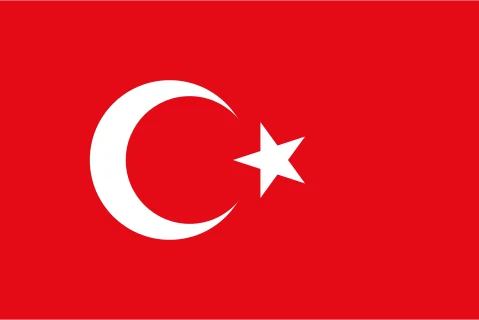
- TürkiyeTürkiye: a crescent drawn by law
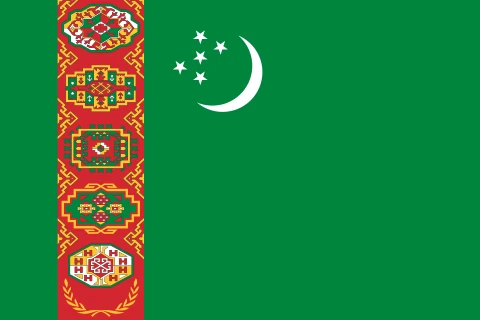
- TurkmenistanTurkmenistan: five carpet guls
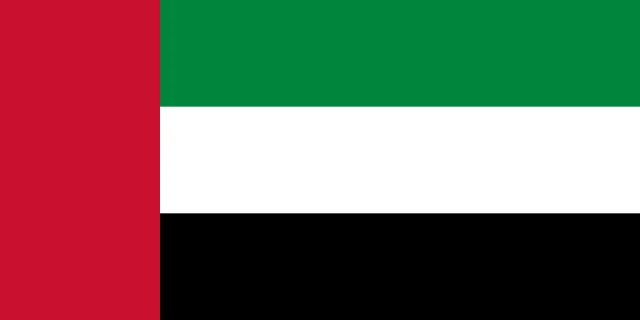
- United Arab EmiratesThe United Arab Emirates: a quarter and three thirds
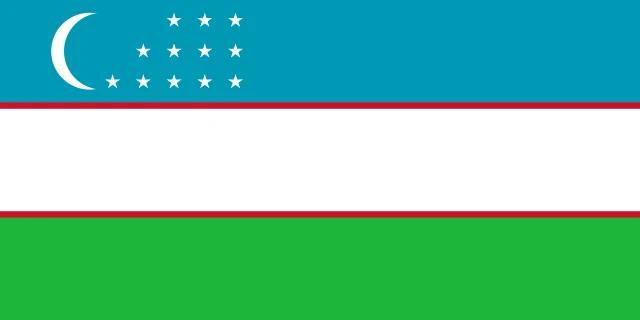
- UzbekistanUzbekistan: twelve stars in three rows
- VietnamVietnam: a star measured in fifths