The flag of the United Arab Emirates
Western Asia · Abu Dhabi
- red25%
- green25%
- white25%
- black25%
Pan-Arab. It’s one of the flags in black, white, green and red, from the Arab Revolt of 1916.
One plate per main colour.
Tap the flag to put it back together.
Investigation
The United Arab Emirates: a quarter and three thirds
The United Arab Emirates’ flag law of 1971 draws the whole flag in just two sentences, and it comes down to a quarter and three thirds. Build it the way the law does. Then hear, as the Cabinet’s flag guidelines tell it, who designed it for a newspaper’s contest.
The United Arab Emirates’ flag is set out in Federal Law No. 2 of 1971, and Article 1 describes all of it in two sentences. It starts with a rectangle whose length is twice its width. In the law, the length runs along the flag and the width runs up it. So the flag is long for every high.
We quote the law in Arabic, from the government’s UAE Legislation portal, and the translations on this page are ours. The portal’s own English version says the Arabic text prevails if the two differ. Article 1 still reads as it did in 1971. The portal keeps earlier texts for Articles 2 and 3 alone, which were changed in 2019. They leave the flag’s specifications and the rules for its use to the Cabinet, and set the penalties for dropping, damaging or insulting it in public.
The law divides that rectangle into four parts. The first one is next to the pole, and its width is of the flag’s length. The Cabinet’s flag guidelines mark the rest of the length as on their drawing of the flag.
That first part is . The law makes it as long as the flag is wide, so it runs the whole height of the flag, down the side by the pole.
The other three parts make up the rest of the flag. The law says they’re horizontal, equal and parallel, so each one is of the height. The guidelines’ drawing marks them as thirds too.
The law gives the stripes’ colours from the top down. The top one is .
The middle stripe is . That’s three of the law’s four parts painted, each in the colour it names.
The bottom stripe is , and that’s where the law’s description ends. It names the four colours but doesn’t give a shade for any of them.
The shades come from the Cabinet’s UAE Flag Guidelines of 2023. They give each colour a Pantone code and a hex code. The red is , the green is , the white is and the black is . The artwork we draw from uses the very same four.
Article 2 of the law, as it reads today, leaves the flag’s approved specifications to a Cabinet resolution. The guidelines are the Cabinet’s own publication, but they don’t say which resolution their shades come from. In 2019 the newspaper Al-Ittihad reported that the Cabinet had approved a compulsory standard for the flag, UAE.S 1971, with set colours. We haven’t been able to read that standard, so we can’t say whether its shades are these.
The guidelines tell the flag’s story too. They say it was designed by Abdullah Al Maeena, who took part in a competition the newspaper Al-Ittihad held in late 1971 to design the country’s flag. Sheikh Zayed bin Sultan Al Nahyan raised it for the first time on 2 December 1971, at the celebrations for the founding of the union. The guidelines add that its four colours were inspired by an old verse from a poem by Safi al-Din al-Hilli, though they don’t quote the verse.
The flag was raised before the law that describes it was issued. On that same day, 2 December 1971, the Supreme Council of the Union set it out in Federal Resolution No. 4 of 1971, which the law’s preamble cites, and the resolution’s one article uses the same words as the law’s Article 1. The UAE Legislation portal gives 21 December 1971 as the date the law was issued and came into force, and that’s the date we go by. The portal also puts both texts in issue No. 1 of the Official Gazette, dated 1 December 1971. That’s before either was issued and before the union itself, and the portal gives the same gazette date to the law that set up the gazette, so we don’t lean on it.
Here’s the whole flag. The guidelines give each colour a meaning, and we quote their own English. The red “symbolizes the sacrifices of the generation that established the union, and the sacrifices of the nation’s martyrs to protect its achievements and gains”. The green “symbolizes growth, prosperity and a green environment, and cultural renaissance in the country”. The white “symbolizes giving, and the state’s approach to support peace and security in the world”. And the black “symbolizes the strength of the sons of the state and their severity, and the rejection of injustice and extremism”.
The guidelines print these meanings in Arabic and in English, and the two don’t match word for word. For the red, for instance, the Arabic speaks of what the founding generation gave, where the English has their sacrifices. That reading of the Arabic is ours.
Flags that look like it
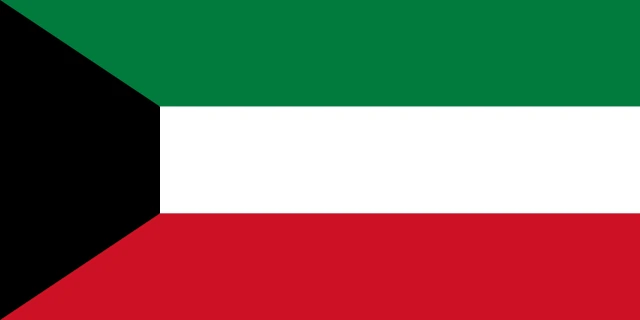
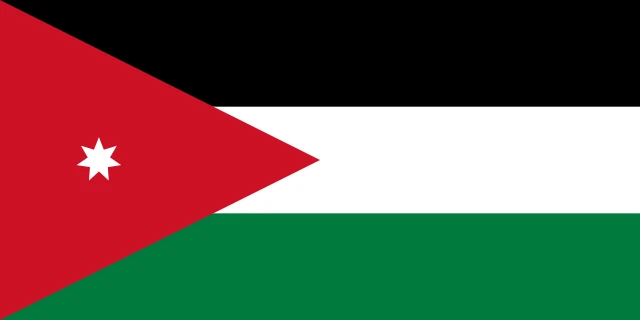
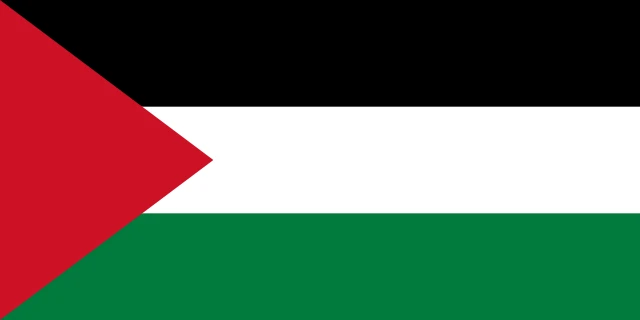
You’ll find the United Arab Emirates on these lists
Each one opens the list.
More flags taken apart in Asia
Each card opens that flag, taken apart step by step.
- UzbekistanUzbekistan: twelve stars in three rows
- VietnamVietnam: a star measured in fifths
- YemenYemen: three stripes and the law that guards them
- AfghanistanAfghanistan: stripes half as wide as they’re tall
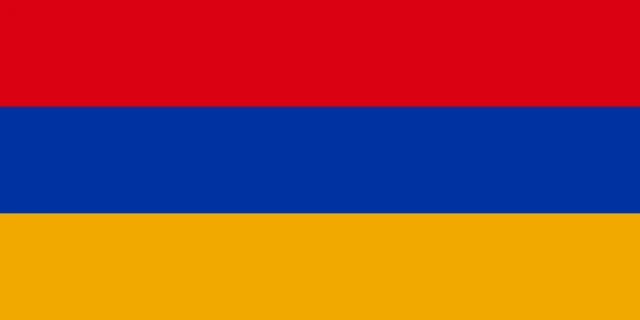
- ArmeniaArmenia: the rules for flying it
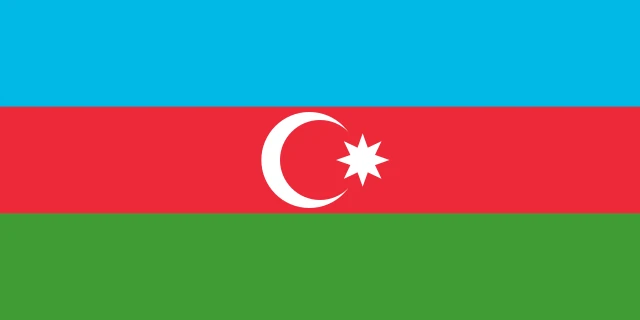
- AzerbaijanAzerbaijan: a crescent round the middle of the flag