The flag of Jordan
Western Asia · Amman
- green28%
- black28%
- red25%
- white20%
Pan-Arab. It’s one of the flags in black, white, green and red, from the Arab Revolt of 1916.
One plate per main colour.
Tap the flag to put it back together.
Investigation
Jordan: finding the star’s centre
Jordan’s Constitution sets out the whole flag in one article, and it even says where the star goes. Its middle sits where the lines between the red triangle’s angles cross. Draw those lines, find the point, and put a seven-pointed star on it.


Jordan’s flag is set out in Article 4 of its Constitution, which dates from 1952. It says the flag’s length is twice its width, so it’s wide for every long. It’s divided across into three equal, parallel stripes. The top one is black, the middle one is white and the bottom one is green.
We read Article 4 in the Arabic edition of the Constitution that Jordan’s Ministry of Foreign Affairs publishes, with the amendments up to January 2022. In that edition, an amended article carries a note naming the gazette that changed it. Article 4 has no such note, and the edition’s list of amendments doesn’t name it either. The translations from Arabic on this page are ours.
On the side by the pole, the article puts a red triangle. Its is equal to the flag’s width, so it runs the whole way up the edge by the pole. Its is equal to half the flag’s length, so its tip is half way along the flag.
The article doesn’t say where the tip sits up and down. The artwork puts it on the line across the middle of the flag, so the triangle has two equal sides, and this page does the same. The article’s words for it, «مثلث قائم», could mean a right-angled triangle or just an upright one, and it doesn’t say which.
Then the article puts a white star in the triangle. It places the star so its middle is where «الخطوط بين زوايا المثلث» cross, the lines between the triangle’s angles. It doesn’t say which lines. We read them as the lines that cut each of the triangle’s angles exactly in half, and here they are.
Lines that cut the angles in half are our reading, not the article’s words. It’s the reading the artwork follows. If you joined each corner to the middle of the side across from it instead, the lines would cross a little further from the pole.
The three lines cross at one point. It’s called the triangle’s incentre, and it’s just as far from each of the three sides. That’s where the star’s middle goes.
By our sum, on the artwork, which is 840 long, the lines cross 129.8 from the pole, and that’s right where the artwork centres its star. By the same sum, lines from each corner to the middle of the side across from it would cross at 140.
The article sizes the star with a circle round that point. The star is as big as will fit in a circle that’s of the flag’s length across.
The article calls it «كوكب أبيض سباعي الأشعة», a white star with seven rays. Here it is as the artwork paints it, with its seven points touching the circle.
The article doesn’t say how far in the notches between the points go. The artwork puts them half way to the middle.
There’s one more rule. The star is turned so the through one of its points is parallel to the triangle’s base, the edge by the pole. So that point faces straight up the flag or straight down it. The artwork has it facing up.
Here’s the whole flag. The Royal Hashemite Court says it was endorsed in its current form in 1922, and officially adopted in 1928 with the Basic Law of the Emirate of Transjordan. The Court says it’s inspired by the banner of the Great Arab Revolt. King Abdullah II’s official website says that banner had black on top, then green and then white, with a dark red chevron. The Court says it was Jordan’s Arab Army officers who suggested moving the white stripe to the middle, so it could be seen from afar.
The Royal Hashemite Court gives what the colours and the star symbolise. It says the black is the Oqab banner, which was the Prophet’s flag and the flag of the Abbasid state. The white is the Umayyad state’s flag, and the green is the flag of the Fatimid state. The red is the banner of the Hashemites since the time of Sharif Abu Nami. And the white seven-pointed star symbolises the seven verses of Surat Al Fatiha, the opening chapter of the Quran. These meanings are the Court’s, not the Constitution’s. The Constitution gives no meanings and no shades, so the shades on this page are the artwork’s.
Flags that look like it
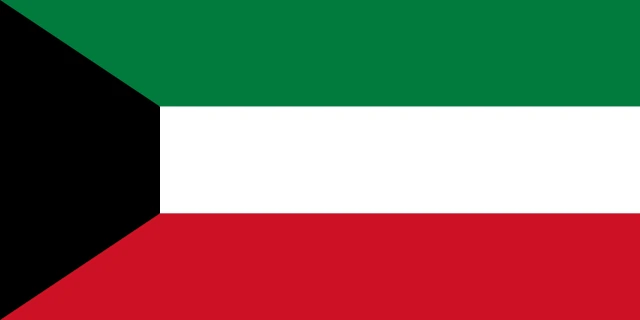
You’ll find Jordan on these lists
Each one opens the list.
More flags taken apart in Asia
Each card opens that flag, taken apart step by step.
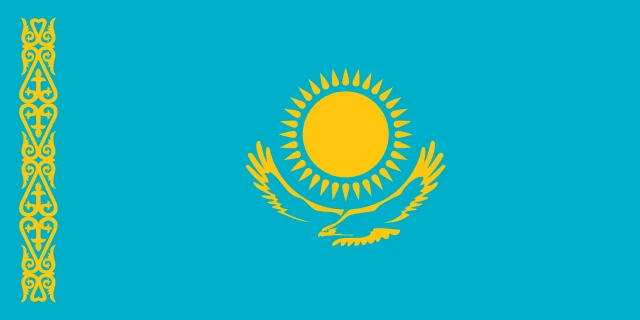
- KazakhstanKazakhstan: an eagle under the sun
- KuwaitKuwait: three measures for the black trapezoid
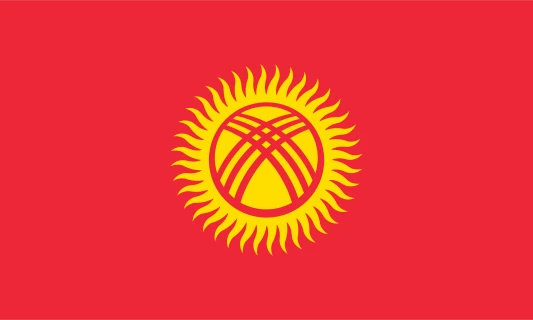
- KyrgyzstanKyrgyzstan: forty rays and a yurt’s crown
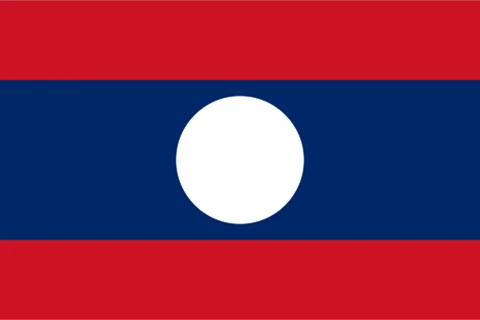
- LaosLaos: a flag in one sentence
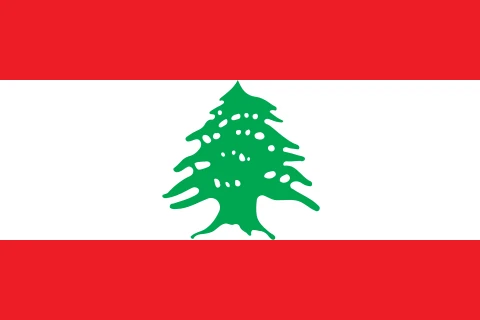
- LebanonLebanon: a cedar set by the constitution
- MalaysiaMalaysia: fourteen stripes, thirteen states