The flag of Botswana
Southern Africa · Gaborone
- light blue75%
- black17%
- white8%
Five stripes, mirrored. 7 flags share this layout, in different colours.
One plate per main colour.
Tap the flag to put it back together.
Investigation
Botswana: counted in 24ths
Botswana’s flag law doesn’t say how long the flag is. It only counts down its depth, in 24ths: 9 of blue, 1 of white, 4 of black, 1 of white and 9 of blue. Build the flag from those numbers, and see how its blue got a new name in 2004.
Botswana’s flag is set out in the Schedule to the Botswana Emblems Act. It describes the flag as five horizontal stripes, and it gives each one a width that’s a share of “the total depth of the flag”, its height from top to bottom. Every share is counted in 24ths. So start by cutting the depth into equal parts.
We read the law as it was passed in 1966, as the Botswana Emblems Law, and the amending Act of 2004, both as scans of the Acts published on botswanalaws.com. Today the law is Chapter 03:04 of the Laws of Botswana.
The law lists the stripes from the top down. The first one is blue, and its width is of the 24 parts.
Next comes a white stripe, and it’s only part wide. That’s as thin as a stripe can get when you count in 24ths.
Then comes the black, parts wide. It sits right in the middle of the flag, with 10 parts above it and 10 below.
Below the black, the law goes back the way it came. There’s another white stripe part wide, and then another blue one parts wide. Add up all five and you get , the whole depth. So the bottom half is the top half turned over.
Here’s the odd thing. The law measures all five stripes against the depth, but it doesn’t say how long the flag should be. The artwork we draw from makes it long for every high, which is three to two. That shape comes from the artwork, not from the law.
We read the whole Schedule and found no length or ratio in it, for the national flag or for the President’s standard, and none in the regulations made under the law that we found. If another Botswana text sets one, we haven’t found it.
When the law was passed in 1966, it called the blue “azure blue”. An amending Act that came into force on 31 December 2004 swapped those words for , wherever they appear in the Schedule. So the President’s standard is Botswana blue now as well, and the same Act rewrote the description of the coat of arms with Botswana blue in it.
None of the laws we read gives Botswana blue a shade, so the blue on screen is the artwork’s.
Put the five stripes together and here’s Botswana’s flag. The law behind it was passed by the Legislative Assembly of Bechuanaland on 23 August 1966, and it took effect on 30 September 1966. It also lets the President make regulations on how the flag is flown, and on restricting its use.
The law doesn’t say what the colours stand for, and we haven’t found an official text that does, so this page leaves the meanings out. The President made regulations under the law in 1972, on using the arms and flying the flag and the standard, and they don’t give the colours a meaning either.
You’ll find Botswana on these lists
Each one opens the list.
More flags taken apart in Africa
Each card opens that flag, taken apart step by step.
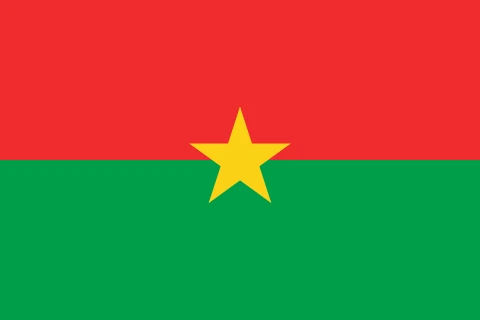
- Burkina FasoBurkina Faso: a tricolour with two stripes
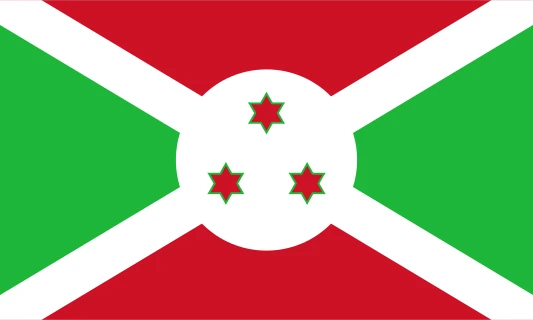
- BurundiBurundi: a flag two and a half metres long
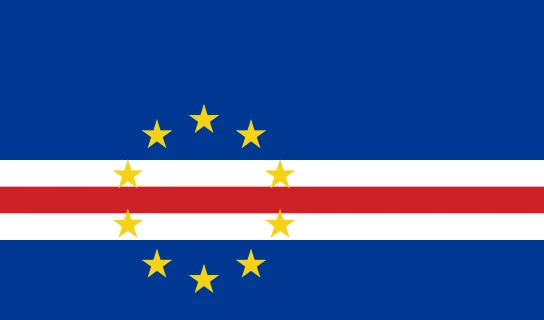
- Cabo VerdeCabo Verde: halves, quarters and twelfths
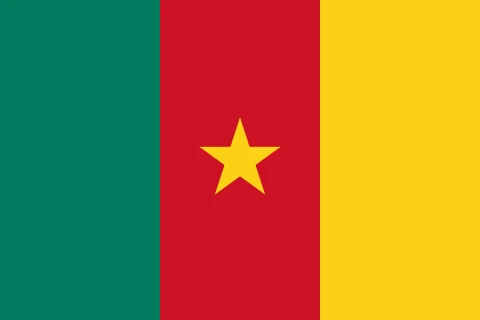
- CameroonCameroon: two stars that became one
- Central African RepublicThe Central African Republic: a flag in one sentence
- ChadChad: three colours, no numbers