The flag of Côte d'Ivoire
Western Africa · Yamoussoukro
- orange33%
- green33%
- white33%
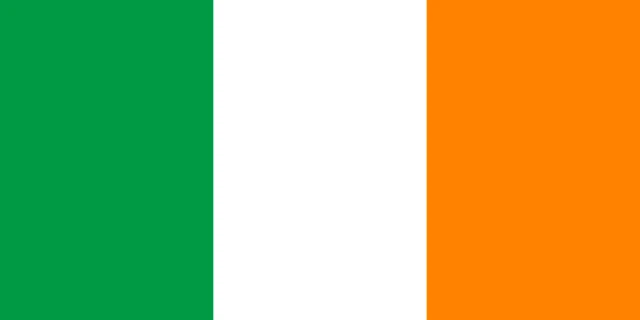
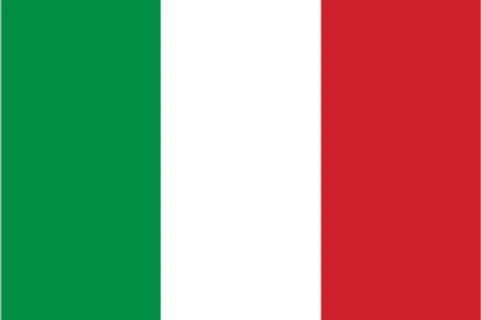
Three columns. 16 flags share this layout, in different colours.
One plate per main colour.
Tap the flag to put it back together.
Investigation
Côte d’Ivoire: three more words for the bands
Côte d’Ivoire’s constitution of 1960 called its flag an orange, white and green tricolour in vertical bands. The constitution of 2000 has the same sentence with three more words, saying the bands are of equal size. Build the flag from those sentences, and see what the words fix and what the artwork adds.


Côte d’Ivoire’s flag gets one sentence in its constitution. It names the colours and says how they lie, but it doesn’t say how long the flag is for its height. So we start from the artwork, which is long for every high.
We read the constitutions in French, as the Presidency and the Constitutional Council publish them, and the translations on this page are ours. None of them gives the flag a proportion or a shade, so the 3 by 2 and the colours on screen are the artwork’s.
The constitution of 3 November 1960 already had the flag, in its first article. It says the national emblem is the orange, white, green tricolour flag «en bandes verticales». In English, that’s in vertical bands. So the lines between the colours run straight up and down.
We read the 1960 text in the copy on the Presidency’s website, which looks typed up from another edition, and we didn’t find it in a printed gazette. Its sentence doesn’t say how wide the bands are, so the dashed lines here are where the artwork puts them.
The sentence names orange first. The artwork puts it in the band by the pole, though the constitution doesn’t say which side the colours start from.
White comes next, and the artwork puts it in the middle band.
Then green, which the artwork puts farthest from the pole. That’s the three colours, in the order the sentence gives them.
The constitution of 1 August 2000 has the same sentence in its Article 29, with three more words on the end: «et d’égales dimensions». In our translation, that’s “and of equal size”. So each band is of the flag’s length. The constitution in force today, of 8 November 2016, keeps the sentence word for word in Article 48. The Presidency’s copy with the revisions of 2020 and 2023 has it unchanged.
The Presidency’s former page on the national symbols says Law no. 59-240 of 3 December 1959 created the flag, but we couldn’t find that law’s text. A 2012 statement from the Ministry of Youth Promotion and Civic Service, printed in the newspaper L’intelligent d’Abidjan, quotes its first article, which calls the flag an orange, white and green tricolour in vertical bands, much as the 1960 constitution does. It says the Legislative Assembly of 1959 hadn’t thought «et d’égales dimensions» necessary.
Here’s the whole flag. A former page of the Presidency’s website quotes the Minister of State Jean Delafosse on what the colours mean, from when he presented the flag to the Legislative Assembly. In his words, the orange recalls “the colour of our rich and generous land”, and it’s “the blood of a young people in its struggle for our emancipation”. The white, he said, is peace, “but the peace of law”. And for him the green is hope, “certainly for others, but for us, the certainty of a better future”.
We read the Presidency’s page as the Wayback Machine saved it in June 2017, since it’s no longer on the live site. The 2012 ministry statement quotes Delafosse’s words too, but it also quotes Mamadou Coulibaly, who reported on the flag for an Assembly committee at the time and read the colours a little differently. For him the orange also made you think of the savannas of the north, and the green also recalled the lush virgin forest. The statement says the Assembly didn’t want to give the colours a geographic meaning, and followed Delafosse. The shades on this page are the artwork’s.
Flags that look like it
You’ll find Côte d'Ivoire on these lists
Each one opens the list.
More flags taken apart in Africa
Each card opens that flag, taken apart step by step.
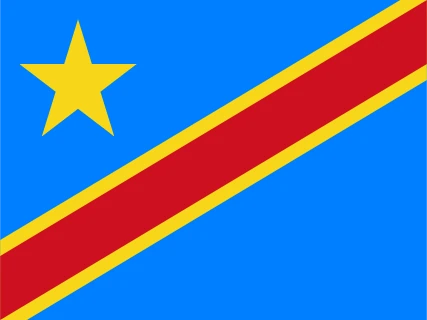
- Democratic Republic of the CongoThe Democratic Republic of the Congo: a sentence from 1964
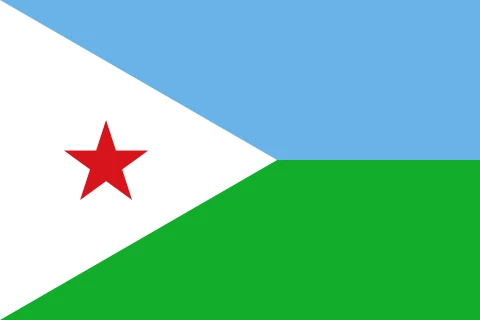
- DjiboutiDjibouti: a flag in a list of colours
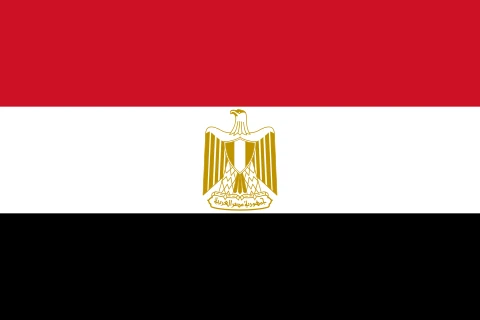
- EgyptEgypt: the Eagle of Saladin
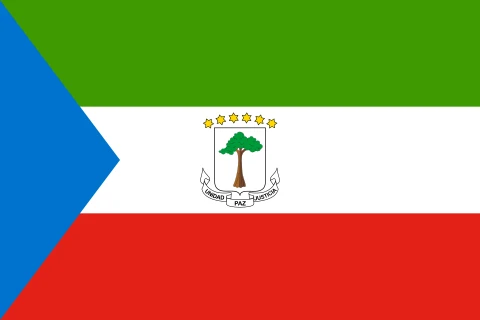
- Equatorial GuineaEquatorial Guinea: the sea by the pole
- EritreaEritrea: thirty leaves
- EswatiniEswatini: a shield on its side