The flag of Italy
Southern Europe · Rome
- green33%
- white33%
- red33%
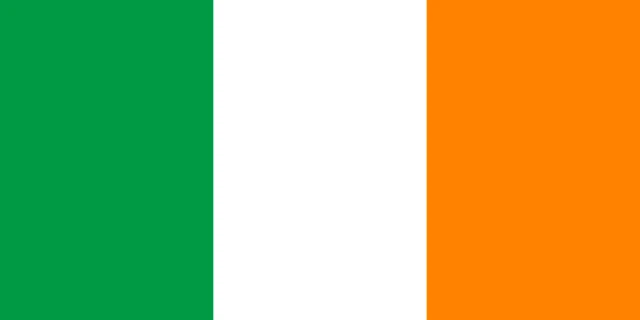
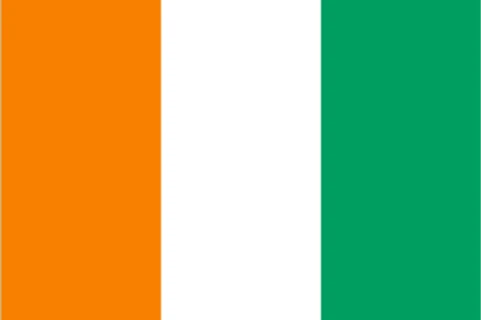
Three columns. 16 flags share this layout, in different colours.
One plate per main colour.
Tap the flag to put it back together.
Investigation
Italy: three colours with a code each
Italy’s constitution gives its flag one sentence, and a decree gives each colour a code for the cloth. Build the flag from that sentence a band at a time, then follow it from 1797, when its stripes lay flat, to a king’s shield in 1848.
Italy’s constitution gives the flag one sentence. Article 12 says the flag of the Republic is the Italian tricolour, green, white and red, in three upright bands of equal size. It names the first, and this drawing puts it by the pole.
The comes next. The sentence doesn’t say which green or which red to use, or how long the flag should be. Other texts fill those in, as you’ll see.
Then the . The Quirinale, the president’s office, says these three colours were already on the banners of the Lombard Legion, raised in the 1790s to fight alongside Napoleon’s army. White and red were in Milan’s old coat of arms, a red cross on white, and Milan’s civic guard had worn green uniforms since 1782.
Article 12 says the bands are the same size, so each one takes of the flag’s length.
The constitution gives the flag no shape. The government’s ceremonial office gives the usual sizes instead. A flag flown outside is centimetres long and high, or 450 by 300, and one indoors is 150 by 100. Each of them is 3 long for every 2 high.
The office calls these rough sizes, and no law that turned up gives the flag a shape.
In April 2003 new flags went up at the Chamber of Deputies, and the newspaper l’Unità wrote that they looked different. The had turned ivory, the had gone from grass to forest and the towards magenta. MPs protested. A minister answered that the flags on sale didn’t match, so the government wanted one shade for every public office.
This step rests on l’Unità’s report of 24 April 2003. No official text about those flags turned up.
A decree of the prime minister, from 2006, fixes the shades. They’re Pantone codes for polyester cloth, taken from a government circular of 2 June 2004: for the green, for the white and for the red. Pantone calls them Fern Green, Bright White and Flame Scarlet. Any other cloth has to come out the same colour as the sample flag kept at the ceremonial department, at every prefecture and at every Italian diplomatic mission abroad.
The codes are for dyed cloth, not for screens, so the colours drawn here are the artwork’s own and only come close.
The tricolour was born in Reggio Emilia on 7 January 1797. The Quirinale says the parliament of the Cispadane Republic decreed that day that its flag of three colours, green, white and red, should be universal. The ceremonial office says that flag had its stripes lying flat, with the republic’s emblem in the middle: a quiver of four arrows, one for each of its first provinces, in a laurel wreath. That July it merged into the Cisalpine Republic, which stood the bands upright.
The ceremonial office’s picture of the 1797 flag has red at the top and green at the bottom. This drawing makes the stripes equal and leaves the emblem out, and without it the stripes run red, white and green from the top, in the same order as Hungary’s.
On 23 March 1848, as he announced the first war of independence, King Charles Albert of Sardinia wanted his troops to carry the shield of Savoy, his family’s arms, on the tricolour. The Quirinale says a blue border went round the shield, so its white cross and red field wouldn’t run into the and bands. When the Kingdom of Italy was proclaimed in 1861, it kept that flag by custom.
After Italy became a republic in 1946, a decree of 19 June set out the new flag for the time being. On 24 March 1947 the Constituent Assembly voted it through, and it went into Article 12. The Quirinale quotes the minutes: the Assembly and the public in the galleries got to their feet, with long applause. Since a law of 1996, 7 January, the day of the 1797 vote, has been the national flag day, though it isn’t a holiday.
Flags that look like it
You’ll find Italy on these lists
Each one opens the list.
More flags taken apart in Europe
Each card opens that flag, taken apart step by step.