The flag of Ireland
Northern Europe · Dublin
- green33%
- white33%
- orange33%
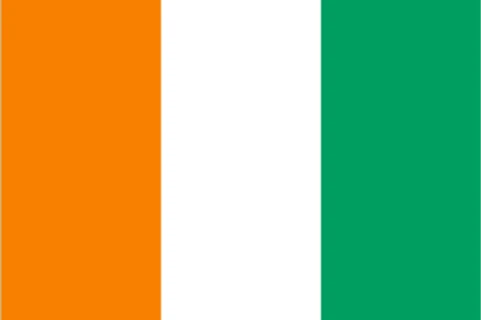
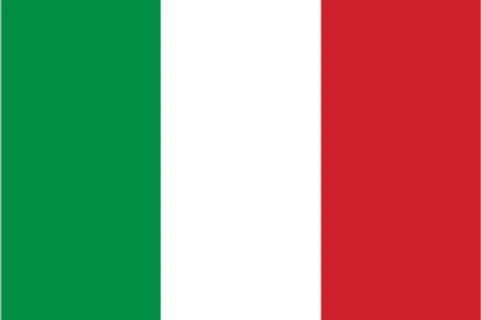
Three columns. 16 flags share this layout, in different colours.
One plate per main colour.
Tap the flag to put it back together.
Investigation
Ireland: the truce in the middle
Ireland’s constitution names its flag’s colours, and the Department of the Taoiseach’s guidelines, which are advice rather than law, do the rest. Build it a band at a time, see the gold they warn against, and read what Meagher said the white in the middle meant in 1848.
Ireland’s constitution names the flag’s three colours, and that’s all it says about it. The shape comes from guidelines by the Department of the Taoiseach, the prime minister’s department. They make the flag a rectangle wide for every deep.
These guidelines are advice, not law. There are no statutory requirements, they say, so following them is a matter for each person. Everything on this page about the flag’s shape and order comes from them, and so do the Pantone numbers.
The three colours are all the same size, the guidelines say, and they stand upright. So each one takes of the width.
The flag should normally hang on a , with the next to it. The guidelines give the green a number in the Pantone colour system, 347. They also say a green flag with a harp was an older symbol used by Irish nationalists, going back at least to the 1640s.
The goes farthest from the staff, and its Pantone number is 151. The guidelines tell of a rival organisation to those nationalists, too. The Orange Order, which was exclusively Protestant, was founded in 1795 in memory of King William of Orange.
The guidelines give only the Pantone numbers. The green, #009A44, and the orange, #FF8200, in this drawing are the artwork’s own screen colours, not the Department’s.
The constitution has an Irish text as well, and if the two ever conflict, the Irish one prevails. Its Article 7 calls the colours , bán and . Ó Dónaill’s Irish dictionary gives flannbhuí as orange. In the same dictionary flann is red, or blood red, and buí is yellow, so the word reads a bit like red yellow.
Reading flann and buí side by side is our own, not the dictionary’s. The Irish quoted here is Article 7 as the Irish Statute Book prints it today. Outside their quotes of Article 7, the guidelines’ own Irish calls the colour oráiste.
Sometimes yellow or is seen instead of orange at civilian functions, the guidelines say. They call that a misrepresentation of the flag, and say it should be actively discouraged. The swap destroys the flag’s symbolism, they add.
The guidelines don’t give a shade for it, so the gold in this drawing is our own.
The goes in the middle. In April 1848, the guidelines say, Thomas Francis Meagher, the Young Ireland leader, brought a tricolour from Paris and presented it to a meeting in Dublin. “The white in the centre signifies a lasting truce between Orange and Green,” he said. He trusted that beneath its folds, the hands of Irish Protestants and Irish Catholics might be clasped in brotherhood.
Earlier that year, on 7 March 1848, Meagher had flown a tricolour from 33 The Mall in Waterford. The early flags weren’t standardised, the guidelines say. All the 1848 ones showed green, white and orange, but sometimes the orange went next to the staff. In at least one flag the order was , and .
The government’s web page says the flag was first flown in Waterford, but the guidelines mention Irish tricolours in 1830 and 1844, and say the flag wasn’t widely recognised until 1848. They don’t say which end of that one flag was by the staff, or how it was shaped and shaded. So we’ve drawn its colours from the staff, on today’s shape.
The guidelines say the tricolour was adopted as the flag of the Irish Free State in 1922. The constitution of 1937 formally confirmed it, in Article 7: “The national flag is the tricolour of green, white and orange.” The government says the flag “is intended to symbolise the inclusion of and the aspiration for unity between people of different traditions on this island.”
Flags that look like it
You’ll find Ireland on these lists
Each one opens the list.
More flags taken apart in Europe
Each card opens that flag, taken apart step by step.