The flag of Luxembourg
Western Europe · Luxembourg
- red33%
- white33%
- blue33%
Three stripes. 35 flags share this layout, in different colours.
One plate per main colour.
Tap the flag to put it back together.
Investigation
Luxembourg: a sky blue, on purpose
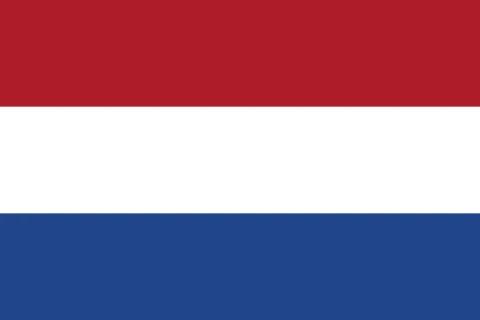
Luxembourg’s flag is red, white and blue in three flat bands, like the Netherlands’ flag. A regulation of 1993 gives its red and blue a number each, and the government’s booklet on the national symbols says the blue is a sky blue to tell the two flags apart. Build it a band at a time, then see the second shape the law allows.


Luxembourg’s flag comes from a law of 23 June 1972 on the national emblems. Its Article 3 makes the flag a piece of cloth in the proportions 5 to 3, or 2 to 1. We’ll start with the first, so the flag is long for every high.
We read the law, its regulation and the constitution in French, as Legilux and the Chamber of Deputies publish them, and the translations on this page are ours. The Chamber’s edition of the constitution says only the French text is binding.
The same article puts three equal bands on the cloth, laid horizontally. So each band is of the flag’s height.
The article names the colours as red, white and blue, in that order. The picture of the flag in the law’s annex has the red on top. The law says only its words are binding, though, not the pictures.
White goes in the middle. No text we read gives it a shade.
And blue goes at the bottom. That’s the same order as the Netherlands’ flag, whose bands are red, white and blue and laid flat too.
The 1972 law named the colours but not their shades. A law of 27 July 1993 says a grand-ducal decree sets them out, and a regulation of the same day does. The red is Pantone and the blue is Pantone .
A Pantone number names a printing ink, not a screen colour. So the shades on this page are the artwork’s, close to those inks but not the inks themselves.
Why that blue? The government’s booklet on the symbols of the state, from 2003, says it was a practical way to tell Luxembourg’s flag apart from the Netherlands’. In its words, the Dutch blue is an ultramarine, while the Grand Duchy’s is a .
The Netherlands names its own blue differently. Its Royal House calls it cobalt blue, “kobaltblauw”, as our page on the Dutch flag says. The booklet gives the Dutch blue no number, so we don’t draw it here.
Article 3 allows a second shape too, long for every high, with the same three equal bands. Drawn as long as the first, it comes out lower.
The faint frame is the 5 by 3 shape. Our artwork comes only in that one, so the 2 by 1 shape is left unpainted. No text we read says when to use which.
Here’s the whole flag, at 5 by 3. Article 4 of the constitution in force since 1 July 2023 says the national emblem is the red, white, blue tricolour flag. The colours are old, the government says. In 2007 it passed on the State Heraldic Commission’s view that they come from the heraldic colours of Luxembourg’s counts, in use since the 13th century. The 1972 law gives the arms as ten stripes of silver and blue with a red lion, crowned in gold.
The same law has a second flag, for inland shipping and aviation, in its Article 4. It’s the red lion on ten stripes of silver and blue, 7 by 5, with the lion facing the staff. In 2006 a member of parliament, Michel Wolter, put forward a bill to replace the national flag with the lion. The government drafted its own text in 2007, keeping the tricolour and letting the lion fly at home as a second flag. In 2008 the Council of State said the country could have spared itself the debate. Neither text became law. The Chamber of Deputies took Wolter’s bill off its list in 2014, and the government, which had tabled its own text in 2009, withdrew it in 2017.
Flags that look like it
You’ll find Luxembourg on these lists
Each one opens the list.
More flags taken apart in Europe
Each card opens that flag, taken apart step by step.
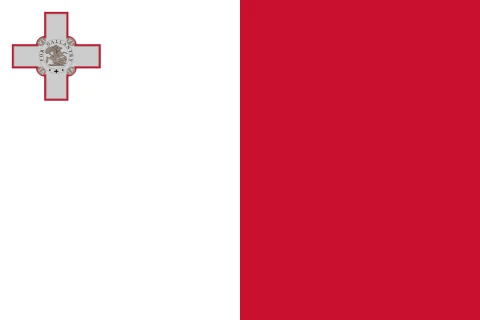
- MaltaMalta: a medal for a whole island
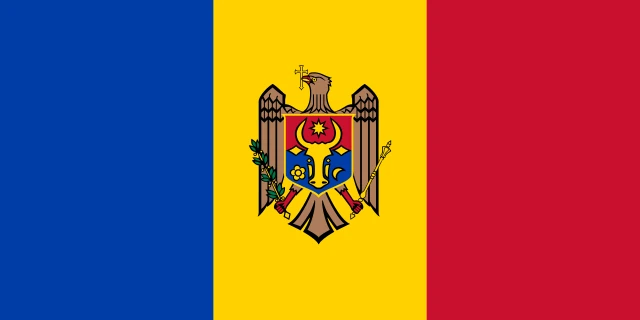
- MoldovaMoldova: an eagle placed by law
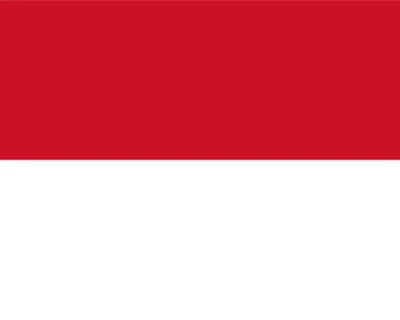
- MonacoMonaco: the prince’s flag and the national flag
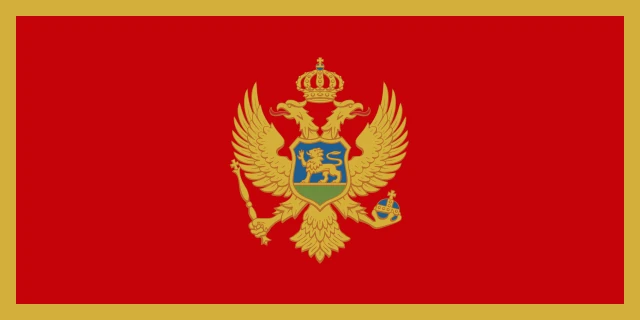
- MontenegroMontenegro: a gold eagle drawn by law
- NetherlandsThe Netherlands: the red that was once orange
- North MacedoniaNorth Macedonia: a sun that reaches the edges