The flag of Netherlands
Western Europe · Amsterdam
- red33%
- white33%
- blue33%
Three stripes. 35 flags share this layout, in different colours.
One plate per main colour.
Tap the flag to put it back together.
Investigation
The Netherlands: the red that was once orange
The Netherlands has no law on using its flag. A royal decree of 1937 set its colours, and the armed forces’ rules measure the shades. Build it a band at a time, then see the orange it had in 1572 and the pennant that still flies with it on royal days.
The Netherlands has no law on how to use its flag, the government says. Its colours come from a royal decree of 19 February 1937, which set red, white and blue as the colours of the flag of the Kingdom. The armed forces’ rules lay the bands out from the top, and the comes first.
The decree was printed in the government’s gazette, the Staatscourant, on 24 February 1937. All the texts on this page are in Dutch, and the translations are ours.
The goes in the middle. The Royal House calls it bright white, “helder wit”, but the armed forces’ rules just say white.
Then the goes at the bottom. The armed forces’ rules call the flag the symbol of the kingdom’s unity and independence. Wherever it’s unfurled, they say, it should be given a place of honour.
The same rules make the flag three bands of the same height, and its height is to its length as is to . A flag for use at home is 1.50 metres high and 2.25 metres long.
These sizes come from the armed forces’ ceremonial rules, published by the Defence ministry. They’d rather have a longer flag on a pole that sticks straight out from a wall, at least 3 to 5. No decree or law that turned up gives the flag a shape for everyone.
The Royal House names the shades. The red is a bright , “helder vermiljoen” in Dutch, and the blue is , “kobaltblauw”.
Sources differ on where those names come from. The Royal House says the 1937 decree spells them out, but the decree itself, as the Staatscourant printed it, only says red, white and blue. The armed forces’ rules give the names from that decree together with an order by the navy minister of 16 August 1949.
The armed forces’ rules go further and measure both shades under a standard light. On the colour scientists’ chart, the red sits at x 0.5847 and y 0.3195, and the blue at x 0.1904 and y 0.1675. We turned those numbers into screen colours ourselves, and got for the red and for the blue.
That last sum is ours, not the rules’. This drawing’s own red, #AE1C28, and its blue, #21468B, are only a touch away from it.
The Royal House says the first mention of the Dutch flag dates from 1572, and back then its colours were orange, white and blue. The came from the Principality of Orange.
The Royal House doesn’t say how the three colours were laid out. Britannica says that after 1577 the flag at sea had them as bands across, in that order. None of these texts gives the orange a shade, so this drawing’s orange is our own.
Around the 17th century, the Royal House says, the orange was slowly replaced by . The story goes that orange was harder to see at sea. When the Netherlands became independent again in 1813, the colours weren’t fixed officially, so either flag could be flown. Red, white and blue was preferred, though, and that’s the one that went up on government buildings.
The Royal House says the custom of an orange pennant on the royal family’s great days dates from then too. Today the flag and its pennant go up on central government buildings on King’s Day, and on some of them for the birthdays of Queen Máxima, Princess Beatrix and the Princess of Orange. The armed forces’ rules make the as long as the flag’s or a little longer, 15 to 30 centimetres wide, with a swallowtail at the end.
The rules don’t say how deep the swallowtail is cut, so that’s our own, and the pennant here is 20 centimetres wide on a flag 1.50 metres high.
Britannica says that in the 20th century, many on the Dutch right wanted orange, white and blue as the real flag, but the flag wasn’t changed. It calls the royal decree of 19 February 1937 the latest to confirm it, and the armed forces’ rules still name that decree today.
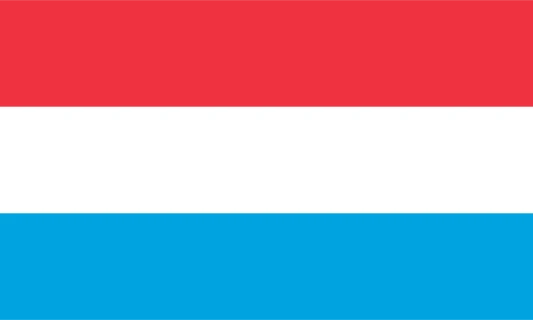
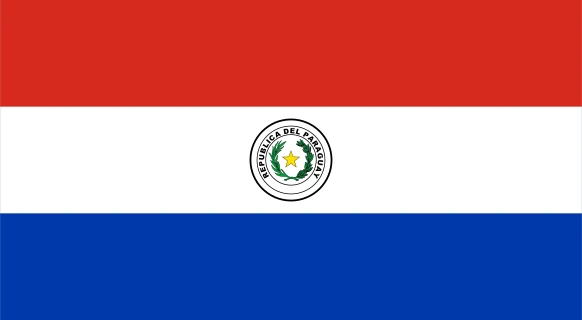
Flags that look like it
You’ll find Netherlands on these lists
Each one opens the list.
More flags taken apart in Europe
Each card opens that flag, taken apart step by step.