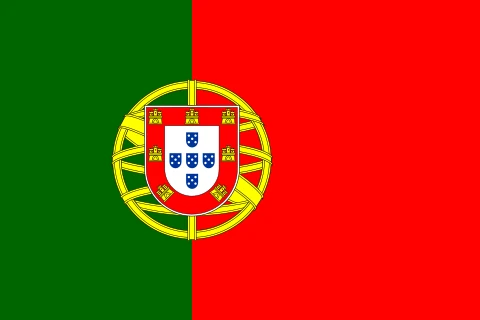
The flag of Monaco
Western Europe · Monaco
- white50%
- red50%
A shape all its own. No other flag is 4:5.
One plate per main colour.
Tap the flag to put it back together.
Investigation
Monaco: the prince’s flag and the national flag
Monaco has two flags, and a single ordinance of 1881 set them both out. The prince’s flag is his arms on white. The national flag is red over white, and the ordinance gave it especially to merchant and fishing ships. Here’s the red and white flag built from that ordinance and Monaco’s constitution, with the government’s word on where its colours come from.
A sovereign ordinance of 4 April 1881 set out two flags for Monaco at once. Its first article says the princely flag is the prince’s arms in colour on a . It’s to fly over the prince’s palace in Monaco and the other homes he lives in, over public buildings and on State ships.
We haven’t drawn the arms. The ordinance says only “Our arms in colour”, and the constitution says the arms of the House of Grimaldi, but neither one describes them or says where on the white they go. The white field takes its shape from the national flag’s artwork. The translations from French on this page are ours.
The second flag is the national flag, in and . Monaco’s government says Prince Charles III set it in 1881, and that it takes up the colours of the Grimaldi arms. Those, it says, recall the red and white of the arms of the Republic of Genoa, which it calls the cradle of the princely family.
No text we read gives the shades. The red painted here is the artwork’s own, #CE1126.
Article 2 of the ordinance builds it. It’s two bands of red and white, laid horizontally, with the red in the upper part and the white in the lower part. Monaco’s constitution of 1962 says the same in its article 7.
Both texts say equal bands. They don’t say how big the flag is, so the bands here are each half the artwork’s height.
The ordinance adds a detail the constitution leaves out. It says the two bands both hold to the .
The French is “tenant toutes deux à la hampe”, and “both hold to the staff” is our translation. The ordinance gives the staff no length, thickness or colour, so it’s a bare line along the flag’s edge here.
The ordinance gives the two flags different jobs. It says the national flag is assigned especially to merchant and fishing ships, while the princely flag flies over the palace and public buildings and on State ships. Private houses may fly either one during public ceremonies and festivities.
The constitution of 1962 says the use of the two flags is still governed by the ordinance of 1881, and Legimonaco, Monaco’s official legal database, lists the ordinance with no repeal. We haven’t found a later text that changes these jobs.
No text we read gives the flag’s proportions. Article 3 of the ordinance says both flags are to be made like the models attached to it, and we couldn’t see those. So the shape here is the artwork’s, high and long.
Legimonaco’s copy of the ordinance doesn’t include the models, and we didn’t find them in the issues of the Journal de Monaco, the official journal, from that spring. So we can’t say whether they give a shape at all.
Here’s the whole national flag. Monaco’s constitution of 1962 still names both flags, the princely one first, and it says their use is still governed by the ordinance of 1881. The government’s page also offers what it calls a poetic vision, in which the flag calls to mind the blood of Saint Devota, a martyr of the 4th century and Monaco’s patron saint.
We quote the constitution as consolidated on Legimonaco, last revised on 6 April 2002. The government’s page on the flag has an English version of its own, but we’ve translated its French ourselves.
Flags that look like it
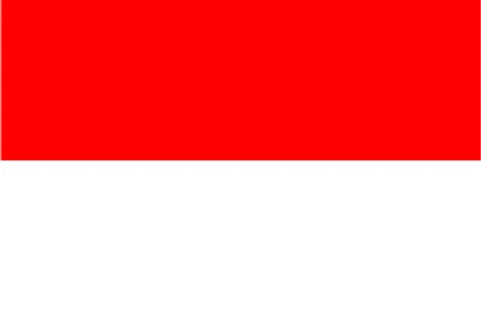
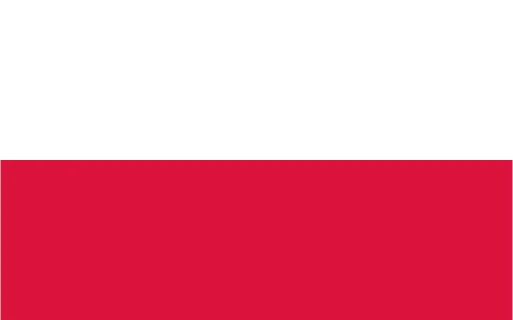
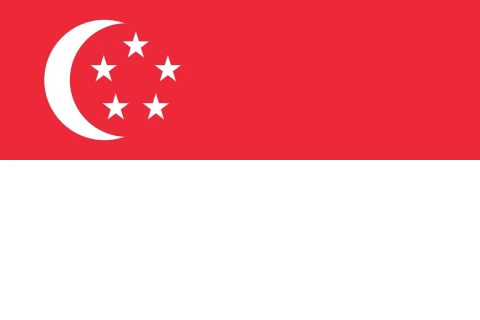
You’ll find Monaco on these lists
Each one opens the list.
More flags taken apart in Europe
Each card opens that flag, taken apart step by step.
- MontenegroMontenegro: a gold eagle drawn by law
- NetherlandsThe Netherlands: the red that was once orange
- North MacedoniaNorth Macedonia: a sun that reaches the edges
- NorwayNorway: a blue cross in a white one
- PolandPoland: why the white is on top
- PortugalPortugal: a sphere for the sea