The flag of Micronesia
Micronesia · Palikir
- light blue98%
- white2%
Most blue of any flag. 98% of it is blue.
One plate per main colour.
Tap the flag to put it back together.
Investigation
Micronesia: four stars in a circle
Micronesia’s flag law asks for four white stars in a circle on blue. The code traces that law back to the Trust Territory of the Pacific Islands, whose flag, Britannica says, had six. Build the flag from that law a part at a time, then find out which of the old stars were left.
Micronesia’s flag law is one short section of its national code. It says the flag is a field of blue, high for every long. Copies made for unofficial use can be other sizes.
The law puts four white stars in a on the blue, and the circle sits right in the middle of the field, round its .
The law doesn’t say how big the circle is. This one is the artwork’s, with each star’s middle three tenths of the height out from the centre.
The law makes the flag five times as wide as a star. It calls the short side of the flag its width, so each star is of the height across.
The law doesn’t say how to measure a star’s width. The artwork fits each star in a circle a fifth of the height across, so from one side point to the other it comes to 19% of the height.
The other three stars go round the circle, a quarter of a turn apart. Each one has a point aimed out, away from the middle. Britannica describes them that way too, as if they were set on an imaginary ring.
The law doesn’t say where on the circle the stars go or which way they point. This drawing follows the artwork.
No law that turned up says what the stars stand for. Britannica says there’s one for each of the country’s four states, and that the blue is the Pacific Ocean. The government names the states as Chuuk, Kosrae, Pohnpei and Yap. Nothing that turned up says which star is which.
The code’s own note under the law traces it back to the code of the Trust Territory of the Pacific Islands, from 1966. The United Nations set up that territory in 1947, with the United States in charge, and it had six districts. Britannica says its flag was first raised on 24 October 1962, with a white star for each district on a light blue based on the United Nations flag. Gonzalo Santos designed it, and it got its final approval in 1965.
No official picture of the six-star flag turned up, so it isn’t drawn here.
Then the districts went their own ways. Palau, the Marshall Islands and the Northern Mariana Islands each went on to become separate, Britannica says. On 12 July 1978, the government says, the people of four districts, then called Truk, Yap, Ponape and Kusaie, voted to form a federation. Kusaie, now Kosrae, had been part of Ponape when the territory began, so three of the old six were left, with Kosrae as the fourth. Britannica says an interim congress approved the four-star flag on 30 November 1978.
The law only says blue. Britannica says that after free association with the United States began, on 3 November 1986, the flag was changed a little. A dark blue took the place of the United Nations blue of the Trust Territory’s flag.
This drawing keeps the artwork’s light blue. No official text that turned up gives the shade.
The same chapter of the code says the flag flies outdoors only from sunrise until sunset, and only on buildings, flagstaffs or halyards. It’s hoisted briskly and lowered ceremoniously. By the Atlas’s own measure it’s 98% blue, more than any other flag here.
You’ll find Micronesia on these lists
Each one opens the list.
More flags taken apart in Oceania
Each card opens that flag, taken apart step by step.
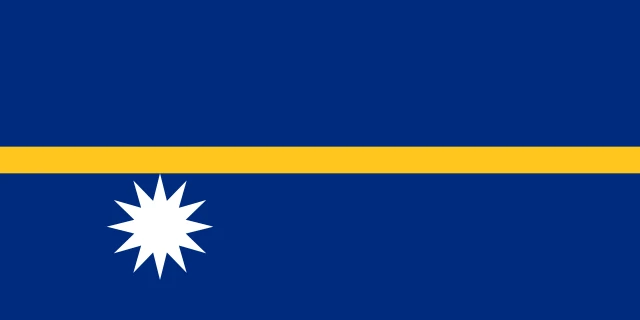
- NaoeroNaoero: a star below the equator
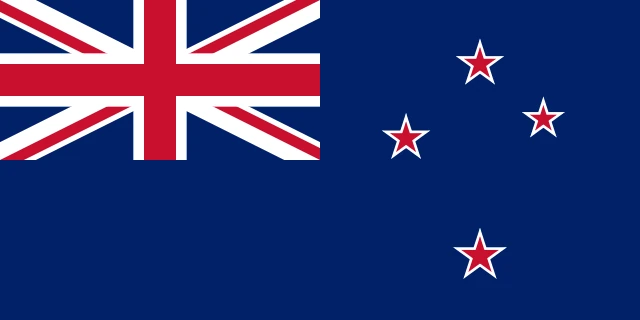
- New ZealandNew Zealand: four stars on royal blue
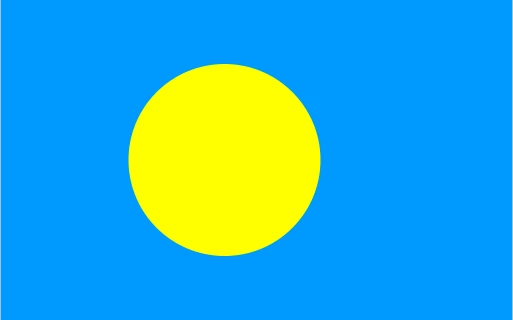
- PalauPalau: a full moon just off the middle
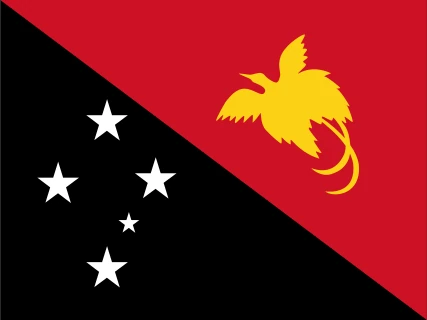
- Papua New GuineaPapua New Guinea: a bird of paradise on a circle
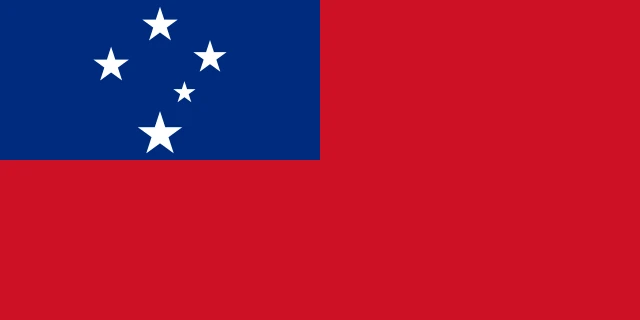
- SamoaSamoa: five stars on a blue quarter
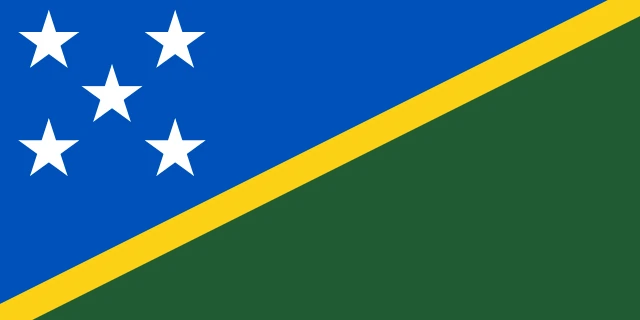
- Solomon IslandsSolomon Islands: five stars that stayed five