The flag of Sweden
Northern Europe · Stockholm
- blue70%
- yellow30%
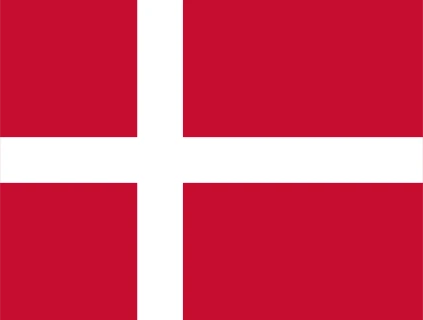
Nordic cross. Its cross sits toward the flagpole, as on Denmark’s flag.
One plate per main colour.
Tap the flag to put it back together.
Investigation
Sweden: five, two, nine
Sweden’s flag law gives every field its size, so along the bottom edge the flag reads 5, 2 and 9. Build it from the 1982 law, then see the shorter flag the Royal Academy of Fine Arts asked for, and why it was turned down.
Sweden’s flag is set out in a law of 1982, which came into force at the start of 1983. It says the flag is blue with a yellow cross, and the cross is set at right angles to the flag’s edges. The flag comes square-cut or three-tongued, and the law makes the square-cut one high for every long.
We quote Lag (1982:269) om Sveriges flagga as the Riksdag publishes it. It’s been amended once, in 1994, and that change touched only the section on who flies which flag. The translations from Swedish on this page are our own.
Then the law sizes the fields, the four blue pieces round the cross. On the two by the pole, the height is to the length as 4 to 5. So each of them is long and high.
The cross gets one short sentence. Its arms are as wide as half the height of each field, and half of 4 is . So down the pole there’s a field, the cross and another field, and they add up to the 10.
The two fields on the far side of the cross are longer. The law makes their height to their length 4 to 9, so they’re long. When the 1906 flag law was being drafted, the head of the coastal artillery wanted these fields shorter. He said it was purely a question of taste, so he couldn’t give any reasons.
He wasn’t the last to want a change. When a 1966 report on the flag was sent out for comment, the Royal Academy of Fine Arts argued that the bottom edge should go , and instead. Cutting the flag by an eighth, it said, would do no violence at all to its traditional character. The Academy of Sciences and the board of Swedish Flag Day took the same view. And the Academy of Fine Arts held to it when the Justice Ministry’s 1981 memo on the flag was sent out for comment.
The Academy’s view comes to us through the memo, which the government printed with its 1982 bill. For the square-cut flag it gives only the three figures along the bottom edge, so the dashed outline keeps the law’s height. That’s our reading, and so is the 14 the outline comes to.
The memo recommended keeping the old proportions, and the government’s bill of February 1982 backed its thinking. The memo granted that people could find fault with them. But it said the flag had had them, “determined by the so-called golden section”, for at least 75 years. It reckoned there were several million flags and pictures of flags in public and private hands too, and those would still have to be accepted after a change. So Sweden would have two versions of its flag for the foreseeable future. The bottom edge still reads , and .
“The so-called golden section” is the memo’s wording. The law itself doesn’t use it.
The law says the fields are light medium blue and the cross is gold yellow, and it leaves the exact shades to the government. An ordinance of 1983 sets them in the Natural Colour System: for the blue and for the yellow. It gives them in CIE figures too, with roughly how far a flag may stray from them. Back in 1906, the government’s bill had called the blue a sort of darker turquoise, and the yellow a gold with a pull towards orange.
The flag here is painted in the ordinance’s shades, in our own conversion of its CIE figures to screen colours, #0C548E and #FFC800, assuming daylight, as the ordinance names no light. The yellow goes a little beyond what a screen can show, so ours is clipped.
The law has a second shape too, the three-tongued flag, where the two outer fields and the cross’s arm run on as tongues. The head of state may fly it, and so may other members of the royal house with the head of state’s permission, with or without the great or lesser coat of arms on a white field in the middle of the cross. The Armed Forces use it as their naval flag, and so do other military authorities under the government’s rules. Otherwise, the law says, the square-cut flag is used.
We haven’t drawn it. The law makes it half as high as it’s long, tongues included, with the outer fields the same size as the inner ones once the tongues are left out. But it doesn’t say how deep the cuts between the tongues go.
Riksarkivet, the National Archives, says the flag’s history goes back to the middle of the 1500s, and that the model was surely taken from Denmark, which had long had its red and white cross flag, the Dannebrog. It says the colours come from the national coat of arms: its three golden crowns on a blue field, and the cross that quarters the great coat of arms into four blue fields. An ordinance lists the days for flying the flag, and 6 June is both Sweden’s national day and Swedish Flag Day.
Flags that look like it
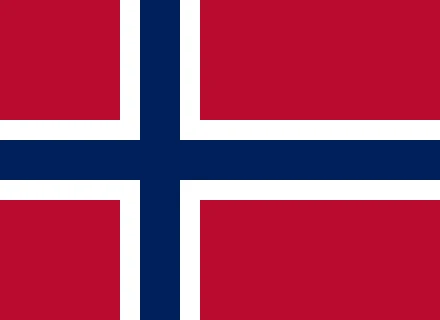
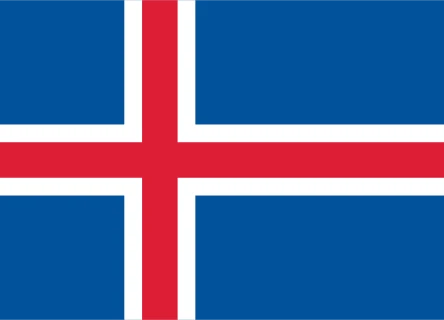
You’ll find Sweden on these lists
Each one opens the list.
More flags taken apart in Europe
Each card opens that flag, taken apart step by step.
- SwitzerlandSwitzerland: a square flag, drawn by law
- UkraineUkraine: which colour goes on top?
- United KingdomThe United Kingdom: three crosses, one right way up
- VaticanVatican City: two keys and a tiara
- AlbaniaAlbania: an eagle, feather by feather
- AndorraAndorra: a coat of arms for two princes