The flag of Norway
Northern Europe · Oslo
- red61%
- navy21%
- white18%
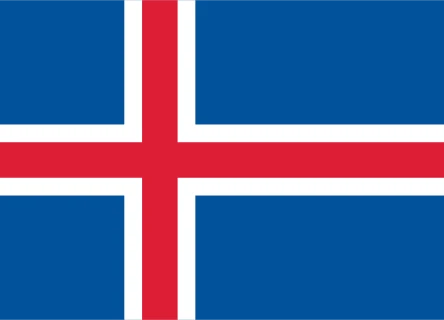
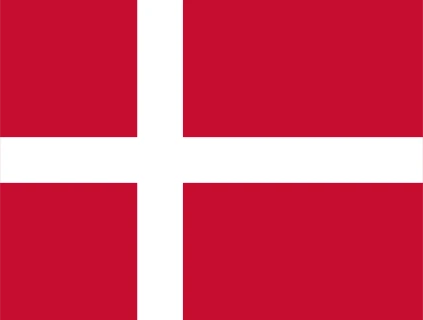
Nordic cross. Its cross sits toward the flagpole, as on Denmark’s flag.
One plate per main colour.
Tap the flag to put it back together.
Investigation
Norway: a blue cross in a white one
Norway’s flag is a dark blue cross inside a white one, on red, and a law of 1898 gives every part of it as a share of the flag. Tap each step to draw it from that law, then see where its colours came from.
Norway’s constitution says the flag’s shape and colours are to be set by law. That law is still the one of 10 December 1898. It calls it Norway’s merchant flag, and it gives every part of it as a share of the flag. The same flag with a split and a tongue flies on the state’s buildings, it says, but it gives no measurements for those.
The law makes the flag high for every long. Every other length in it is a number of those parts. A sixteenth of the height and a twenty-second of the length come out the same size, so the parts are square.
The two red fields next to the pole are squares, the law says. Each one is parts high and 6 parts long.
Right after the squares comes the white. The law sets the cross in a white border, and the border is part wide on each side of the blue.
Inside the white goes the dark blue cross, parts wide. With the white on both sides, the whole cross is 4 parts wide, and the blue sits right in its middle.
The two red fields away from the pole are as high as the squares but twice as long, parts. That’s what sets the cross toward the pole, as on Denmark’s flag. It all adds up: 6, 1, 2, 1 and 12 make the 22 parts along, and 6, 1, 2, 1 and 6 make the 16 down. The Atlas’s artwork is drawn on exactly those numbers.
The law gives the colours only in words: a bright red, a dark blue and white. Store norske leksikon, the Norwegian encyclopedia, says no colour codes are set, so the shades vary. It says that until 2018 the foreign ministry had a shade of each for printing, and that it dropped them after flag makers said its red wasn’t bright enough. The red and blue here are the ones it says several Norwegian flag makers usually use.
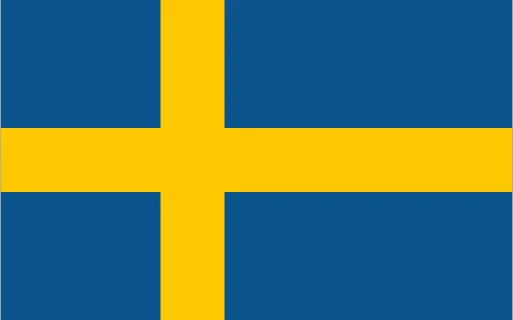
The flag is older than the law. The Storting chose it in May 1821, from a design by Frederik Meltzer, a member from Bergen. He wanted a cross, as Sweden, Denmark and others had. And he wanted red, white and blue, the colours he said now stood for freedom, as in France’s flag of freedom, the Dutch and American flags and Britain’s Union Flag. King Karl Johan let it be used on merchant ships near home, by a resolution of 13 July 1821.
Until 1814 Norway was part of the Danish state and used Denmark’s flag. A minister, Peter Motzfeldt, wrote in his diary the day after the vote that the new flag was the old Danish one with a blue cross inside the white. He wondered if it would be easy to tell apart from a distance. Store norske leksikon says Meltzer even told thrifty members they could use the old flags and not pay for new ones. Cut an old Danish flag into four along the white, it explains, sew blue in between, and you get a Norwegian flag of nearly the right shape.
From 1844, while Norway was in a union with Sweden, the flags of both carried a union mark by the pole. Store norske leksikon says it mixed the two countries’ colours in equal shares. It came to be called the herring salad. In the 1890s the Storting voted three times to take it off the merchant flag. King Oscar II wouldn’t sign, but under the constitution the third vote made it law anyway. That’s the law of 1898, in force since December 1899. The war flag kept the mark until 1905.
Flags that look like it
You’ll find Norway on these lists
Each one opens the list.
More flags taken apart in Europe
Each card opens that flag, taken apart step by step.